
— Kahlil Gibran
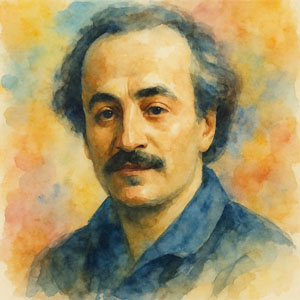
Lebanese poet and artist Kahlil Gibran (1883–1931) shared the beauty of his winged heart and a gift for spiritual insight in his masterpiece The Prophet (1923), a cycle of twenty-six poetic essays on life’s most tender themes.
“In the depth of my soul there is a wordless song,” he wrote. With words—and with wordlessness—he honored the sacred nearness of the everyday.
Blending Eastern and Western sensibilities, Gibran drew from his Lebanese childhood, his adopted America, and a season studying art with Auguste Rodin in Paris. Through poverty and loss, his pen moved with mystical clarity and creative fire.
He met and sketched kindred spirits—William Butler Yeats (1911) and Carl Jung (1913)—and pondered the hidden patterns of the world. “In one drop of water are found all the secrets of all the oceans.”
A perennial bestseller, The Prophet keeps finding new readers. From the Jazz Age to the flower children to seekers today, his pages remind us we are greater than we know.
Gibran asked, “Does the song of the sea end at the shore—or in the hearts of those who listen to it?” The answer, he whispered, is found in a winged heart.
 Give
Give