— Franz Goebel
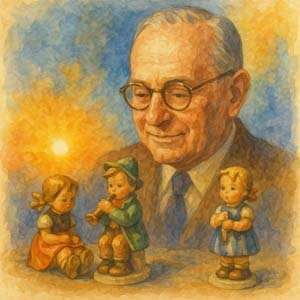
In 1933, German porcelain maker Franz Goebel stumbled upon something extraordinary—postcards in a Munich shop, drawn by a young Franciscan nun named Sister Maria Innocentia Hummel.
Her drawings of children—wide-eyed, playful, and full of innocence—reflected the simple joys of village life in Massing. They captured the very spirit Goebel wanted to share with the world. A creative partnership was born.
In a time when children were rarely depicted realistically in fine art, Hummel’s work was revolutionary. It blended whimsy and reverence, inviting viewers to remember the heart of their own childhood.
The first Hummel figurines were released in 1935 and became an instant sensation. Through war, grief, and uncertainty, her gentle art endured—offering hope, sweetness, and a return to simpler things.
Today, Goebel artists continue to sculpt from her sketches, honoring her legacy of innocence and spirit. As art historian Ulrich Gertz said, “Her images will still be as strong and valid in 100 years.”
Today, Goebel artists continue to sculpt from her sketches, honoring her legacy of innocence and spirit. Her art delights children, yes—but its quiet brilliance lies in how it touches the hearts of adults. In a fast and fractured world, these figurines remind us of what’s soft, still, and sacred inside us all.
In the quietest moments, we can still hear the laughter of our childhood. That is the gift of Hummel’s legacy—innocence remembered, beauty preserved, and joy rediscovered. Goebel endures because it creates art with heart—timeless expression infused with kokoro, the soul of feeling.
 Hold on to the sweet spark of your childhood.🧡